Analysis of Rhetorical Style in Surah Ar-Rahman: A Study of Ta'kid, Takrar, and Muqabalah
Keywords:
Balaghah, Ta'kid, Takrar, Muqabalah, Surah Ar-Rahman
Abstract
This study examines rhetorical stylistic devices in Surah Ar-Rahman, verses 1– 17, focusing on three main elements of Arabic stylistics: ta'kid (emphasis), takrar (repetition), and muqabalah (contrast). The method employed is a descriptive- analytical approach using the balaghah methodology. The analysis reveals that Surah Ar-Rahman contains strong ta'kid constructions through the particles inna and lam taukid; the most prominent takrar in the refrain verse Fabi'ayyi alaa'i rabbikuma tukadzdziban and muqabalah that presents a semantic opposition between worldly blessings and human acknowledgment. These three elements synergistically create a strong aesthetic and argumentative effect, reflecting the linguistic miracles of the Qur'an.
Published
2026-05-19
How to Cite
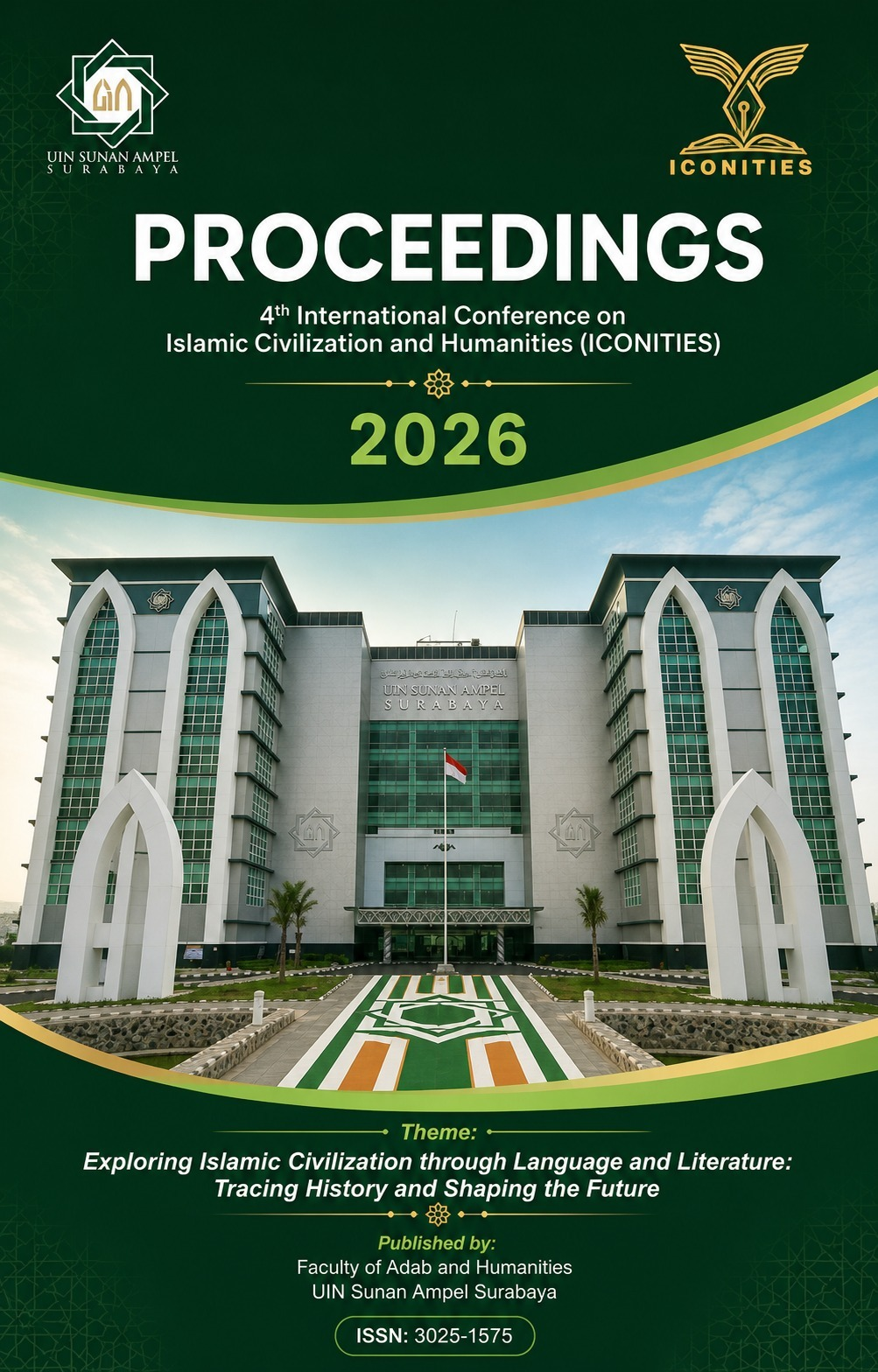
Ubaidillahi, M. A., Kurniawan, A., Riyadi, A. I., & Muhaimin. (2026). Analysis of Rhetorical Style in Surah Ar-Rahman: A Study of Ta’kid, Takrar, and Muqabalah. Proceedings of International Conference on Islamic Civilization and Humanities, 4, 332-340. Retrieved from https://proceedings.uinsa.ac.id/index.php/iconfahum/article/view/4746
Issue
Section
Articles